|




|
|
|
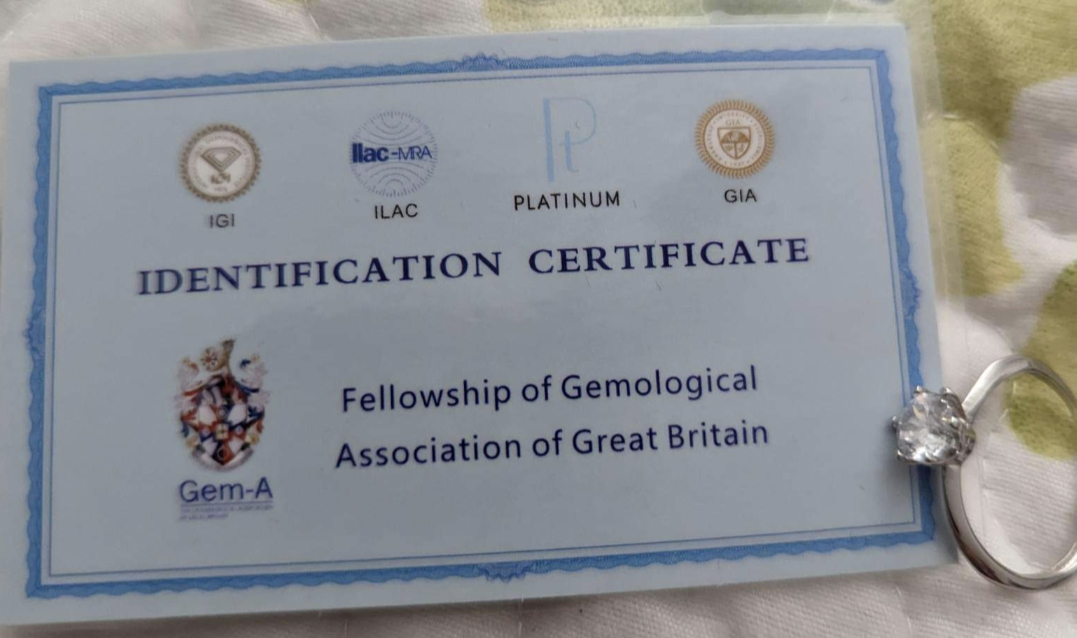
Many of the affected individuals who have contacted Gem-A via email and social media report receiving a ‘diamond solitaire ring in platinum’ in a grey or pink ring box. This is placed inside a tell- tale pink gift bag with the word ‘Princess’ in gold lettering. There are no identifying postage labels, receipts, confirmation letters or information documents inside the parcel, which lead individuals to contact Gem-A for guidance. The parcel includes a fake laminated ‘Identification Certificate’ bearing information about the ring. It is labelled with “Fellowship of Gemological Association of Great Britain” – note the spelling of ‘gemmology’ – and is also marked with the logos of the International Gemological Institute (IGI), the International Laboratory Accreditation Cooperation (ILAC), Platinum Guild International, and the Gemological Institute of America (GIA). Gem-A was initially alerted to the issue in March 2023, when a handful of isolated incidents were reported via social media and email. In recent weeks, however, the practice appears to have reared back into action, with multiple affected parties sending concerned direct messages and emails about jewellery items they hadn’t ordered branded with the Gem-A logo. Gem-A CEO Alan Hart FGA comments: “Organisations in the jewellery and gemstone sectors are no strangers to fraudulent practices, but this strange pattern of behaviour whereby unsuspecting members of the public receive items of jewellery with fake ‘identification certificates’ is baffling and worrying. As an educator and membership organisation, we don’t produce jewellery, nor do we provide any kind of grading or stone identification services. Although our Members and those in the trade are undoubtedly aware of this, the public is less informed. We are monitoring the situation closely.” Individuals receiving these parcels are from geographically diverse areas, including the United Kingdom and northern Europe. Anyone who receives such a parcel is advised to report it to Gem-A. If you are then approached for any reason by an individual or company claiming to be the sender, whether they say they are from Gem-A or not, please do not be lured in. Alan Hart adds: “We have received no reports of follow-up requests from the sender(s) attempting to extort money or data from any of the recipients of these fraudulent parcels. However, we are asking everyone to be on high alert. We urge you not to share your personal or business details in this scenario and encourage you to seek advice before taking any next steps.”
|
|
 Gem-A – the Gemmological Association of Great Britain, is issuing a warning to its Members, the gemstone trade and the wider public about an ongoing issue with fraudulent jewellery parcels, which are being distributed bearing fake Gem-A credentials and logos.