GPM News Bureau in Kuala Lumpur
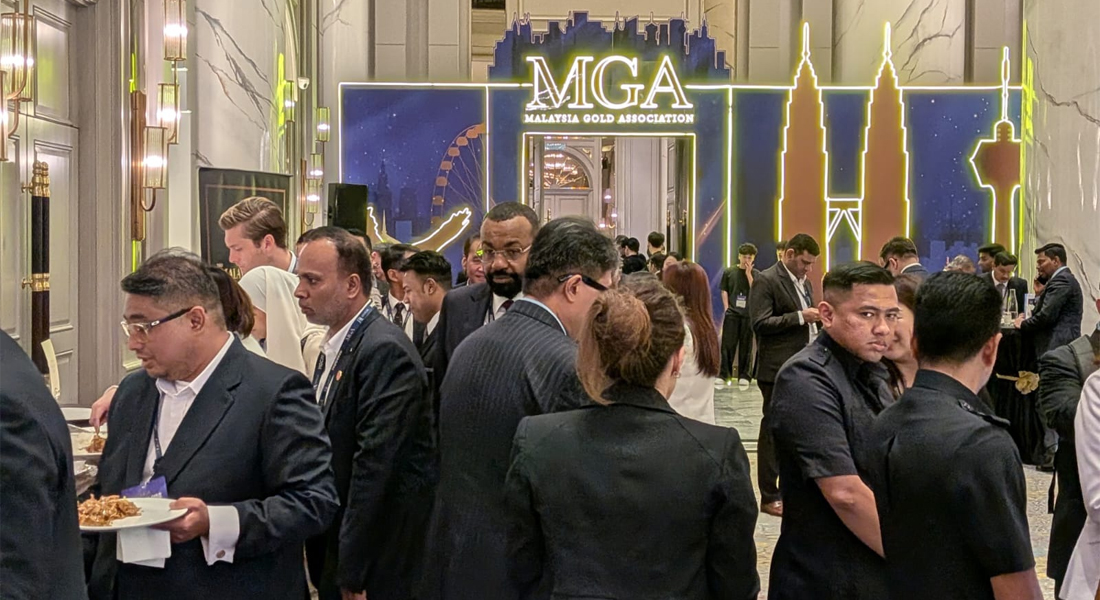
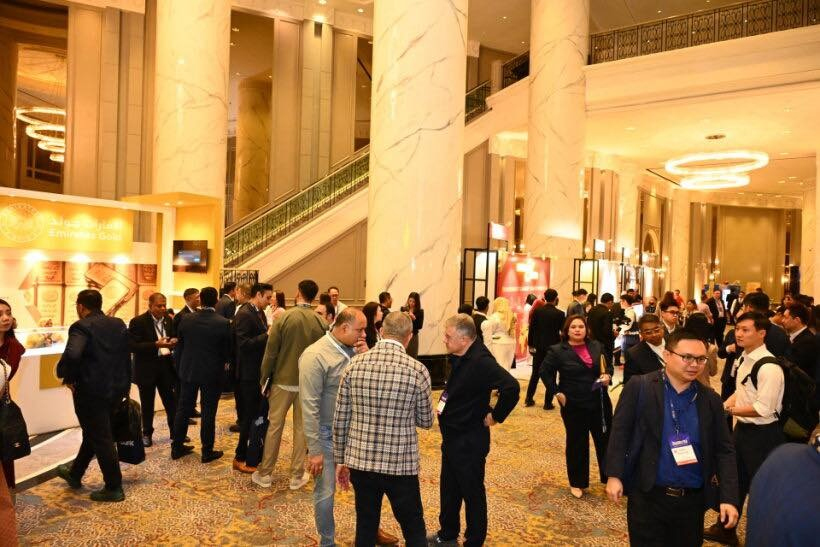
The 3rd Malaysia Gold Conference 2026 commenced on February 2nd in Kuala Lumpur, bringing together delegates from over 30 countries, reaffirming Malaysia’s growing stature in the global gold & precious metals landscape. The conference opened with a strong emphasis on trust, transparency, and the evolving role of Asia in shaping the future of the gold industry.
In his inaugural address, Mr Dato’ Seri Louis Ng, President of the Malaysia Gold Association, welcomed international delegates and outlined the theme of this year’s conference, describing it as one destined to define the future direction of gold. He noted that the event features over 20 local and international speakers who will deliberate on critical issues ranging from market structure and regulation to technology and ethical sourcing.
Dato’ Seri Louis Ng highlighted that Malaysia is uniquely positioned to take a leadership role in the global gold industry, supported by business-friendly policies and a well-developed ecosystem that encourages sustainable growth across the sector. He further emphasized Malaysia’s role as a global reference point for Shariah-compliant gold investment, noting that the country continues to set benchmarks for ethical and compliant practices in gold trading and investment.
He further underscored Malaysia’s expanding role within the global precious metals value chain. He pointed out that Malaysia is among a select group of countries actively engaged across the entire spectrum of the industry, from trade and refining to manufacturing and investment. This integrated participation, he said, represents a core national strength.
He elaborated on the maturity of Malaysia’s gold ecosystem, which supports responsible innovation through close collaboration between public and private stakeholders. Central to this effort is the Malaysia Gold Industry Principles (MGIP), inspired by global best practices, including frameworks advocated by the World Gold Council. Dato’ Seri Anwar also referenced international benchmarks such as India’s IIBS gold ecosystem and adherence to the LBMA Blue Book, positioning these standards as critical tools for strengthening governance, transparency, and market credibility.
Addressing industry challenges, he noted that MGIP was introduced at a critical juncture, particularly in combating counterfeiting and enhancing consumer confidence. He emphasized Malaysia’s potential to function as a regional trade and import hub, supported by institutional collaboration, including with PSM.
In a special address, David Tait, Chief Executive Officer of the World Gold Council, focused on the declining trust in gold as an investment and stressed that rebuilding confidence is vital for the long-term health of the global gold market. He identified transparency gaps, governance concerns, and price volatility as persistent barriers for investors and consumers. Tait called for independent audit mechanisms and globally recognized assurance frameworks across the gold value chain, arguing that voluntary ethical practices must evolve into standardized systems to enable consumers to purchase gold with confidence.
A significant portion of his address was dedicated to Artisanal and Small-Scale Gold Mining (ASGM), which accounts for approximately 10 to 20 per cent of global gold production. While acknowledging ASGM’s economic importance, Tait highlighted serious challenges such as human trafficking, child labour, and mercury usage. He emphasized the need to professionalize and formalise ASGM through responsible gold initiatives, stronger government-to-business collaboration, and access to large-scale processing infrastructure. He concluded by pointing to upcoming industry reports and enhanced standards aimed at improving transparency and restoring long-term trust in the physical gold market.
In a special address by Zheng Yudong, Group CEO of DK Bank, he stated that Bhutan surprises the world by becoming 3rd largest bitcoin owner, which is organically mined. It is also the first country to accept crypto as a tourist payment. DK Bank launches the first sovereign-backed golden token on Solana.
In the first session, Chirag Sheth of Metals Focus spoke on Vietnam’s evolving gold ecosystem, noting a transition toward formalization with participation expected from banks and companies across manufacturing and retail. He observed that gold in Vietnam increasingly functions as a store of value competing with domestic currency, opening the possibility of a spot exchange model similar to India’s IIBX. He also noted expectations of higher imports of gold bars, coins, and ETFs, even as recent price volatility has not triggered a surge in consumer buying.
Regional policy developments were highlighted by Handi Sutanto of Antam, who noted Indonesia’s removal of personal income duty on gold and the restructuring of tariffs to favour investment-grade gold over jewellery imports. These measures, he said, reinforce gold’s role as a financial asset, with regional demand reaching nearly six tonnes per month.
Boonlert Siripatvanich, Chief Executive Officer, Ausiris Co., Ltd. mentioned that Southeast Asia is witnessing steady growth in the gold and precious metals market, supported by ongoing reforms aimed at simplifying trade and improving transparency. These initiatives are expected to make the ecosystem more efficient and accessible for all industry stakeholders.
Other speakers addressed market infrastructure and integration. Pramod Mehta of Finmet Group spoke on post-COVID market maturity in Asia, calling for Asia-relevant benchmarks, deeper liquidity, and broader product depth. Dato’ Seri Louis Ng, founder of Public Gold Group, highlighted lower regulatory barriers, emerging trading hubs in Indonesia, and the need to optimize logistics costs and transaction fluidity. Mohammad Ayyob of Sam Precious Metals discussed bullion supply chain realignment, with Dubai emerging as a central hub for logistics, liquidity, and transparency. Monal Thakkar of Ashoka Global contrasted India’s largely one-sided gold market with the two-sided trading structures of Dubai, Malaysia, and Singapore. He identified the UAE, Malaysia, and Thailand as markets with strong growth potential, citing refining capacity, manufacturing strength, and regional trade integration.
A dedicated session on Shariah gold explored regulatory perspectives and implementation models. Prof Dr. Mohammad Akram Laldin highlighted Malaysia’s institutional role in stabilizing Shariah-compliant gold markets, while Dr. Salim Ali Al-Ali outlined the UAE’s Shariah governance framework, emphasizing T+0 settlement and allocated gold certificates. Maya Marissa Malik discussed global Shariah reforms and Kazakhstan’s evolving framework, and Riko Wardhana presented Indonesia’s dual licensing model and Shariah gold products tailored for pilgrimage and investment.
The Malaysia Gold Conference 2026 set a comprehensive tone, positioning Malaysia as a critical convening point for dialogue on trust, regulation, and the future architecture of the global gold market.