DUBAI DIAMOND CONFERENCE to Focus on Reigniting Desire & Unlocking New Value
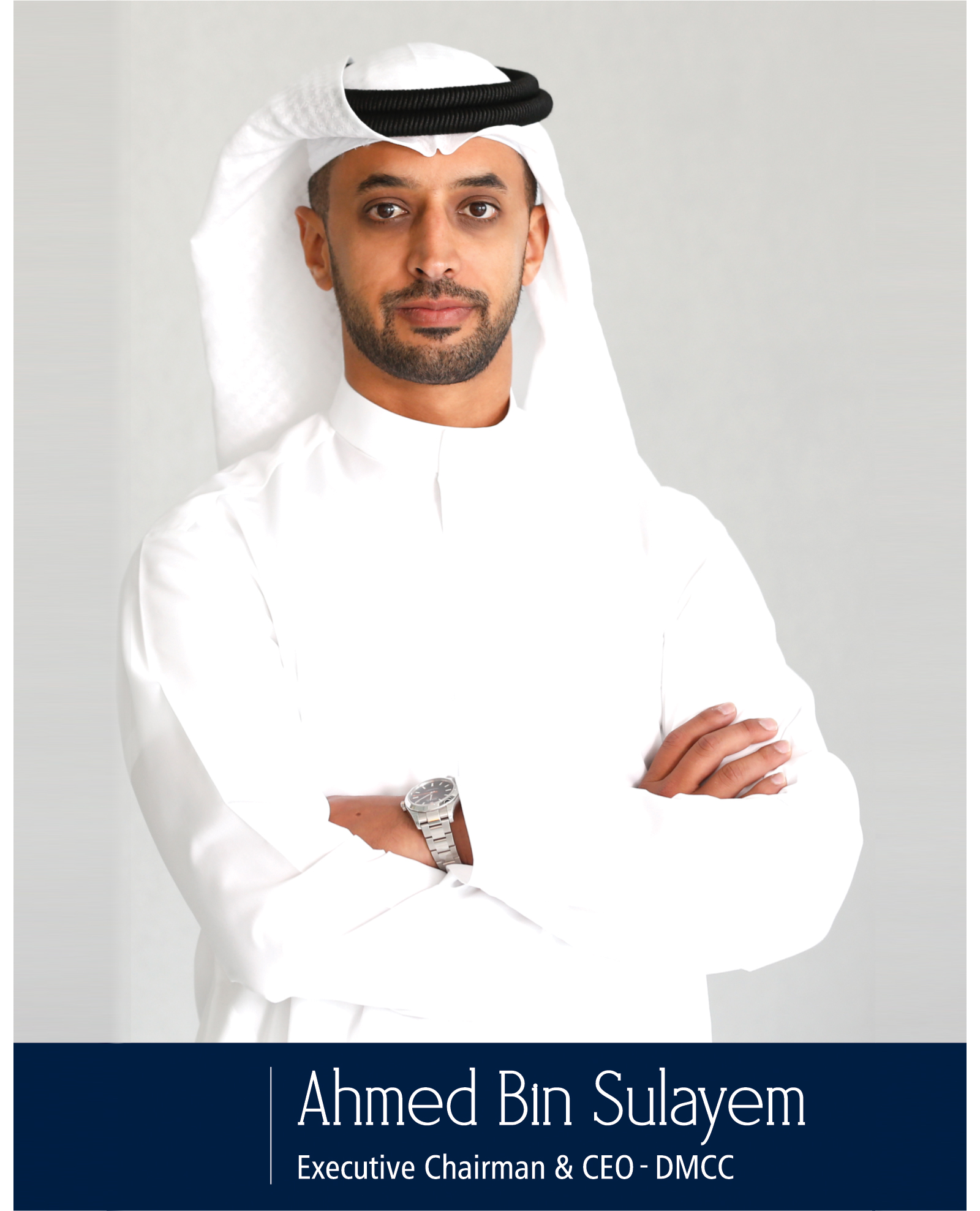
In an exclusive interview with Mr. Ahmed Bin Sulayem, Executive Chairman and CEO of DMCC, The New Jeweller UAE team gains valuable insights into the ongoing challenges confronting the natural diamond sector, the opportunities shaping the industry’s future, and the significance of Dubai Diamond Week for the global gem and jewellery trade. Excerpts:
Dubai’s diamond trade reached a record 41.7 billion US dollars in 2025. How will Dubai sustain this momentum amid current market pressures?
That result, alongside a record 359.5 million carats, marked the first time Dubai achieved all-time highs in value and volume in the same year. Natural diamonds accounted for 95.8% of total trade value, which tells us where the foundation of this market still lies. Dubai's performance, despite the pressures facing the wider diamond industry, is no coincidence. It reflects a longterm vision and more than two decades of investment in infrastructure, international relationships, and market access, within a business-friendly environment. Central to this has been the Dubai Diamond Exchange, which has helped establish Dubai as a trusted, globally connected trading hub. These advantages have attracted international traders, strengthened links across the diamond value chain, and reinforced Dubai's competitive position.
Today, DMCC is home to more than 1,365 diamond and precious stones companies, while the Dubai Diamond Exchange operates the world's largest diamond tender facility, having hosted 103 tenders and auctions in 2025. Together, they connect producing countries with manufacturing centers and consumer markets worldwide. Beyond facilitating trade, the Exchange brings Executive Chairman & CEO - DMCC industry stakeholders together, strengthens market confidence, and supports the development of new trading models and commercial opportunities. Sustaining that momentum means continuing to improve the conditions for trade through reliable authentication, efficient logistics, access to finance, and stronger connections between markets. It also requires an honest view of what our members are facing.
Consumer preferences are shifting, prices are under pressure, and many across the value chain, from producers to manufacturers and retailers, are feeling that strain. Dubai's record performance does not diminish the scale of these challenges.
That is why the second Dubai Diamond Week and the seventh Dubai Diamond Conference matter. Our priorities are to protect existing trade flows, restore confidence, build commercial partnerships, and develop credible new sources of demand. Dubai's long-term success depends on helping the wider industry become stronger and more resilient.
What must the natural diamond industry do to strengthen its value proposition and support recovery?
The industry must accept that the market has fundamentally changed. We cannot continue with the same approach and expect different results. Natural diamonds have qualities that cannot be manufactured. They are geologically rare, finite, and billions of years old. But we cannot assume consumers will understand that significance on their own. Communicating it requires a compelling product, a trusted explanation, and a meaningful experience at the point of purchase. The task is to make natural diamonds relevant to the moments that matter to people: celebrating a relationship, marking an achievement, or choosing something to pass on to the next generation.
This is where The Swiss Parallel offers important lessons. Developed by DMCC and ORIGINALLUXURY, the study examines how Swiss watchmaking recovered from the quartz crisis. The Swiss industry did not recover by competing with quartz on price or volume. It restructured, innovated, and rebuilt its position around craftsmanship, heritage, scarcity, and value, and mechanical watches re-emerged as luxury objects whose appeal went far beyond telling the time. Today, Swiss watchmakers command a substantial share of global market value while accounting for only a small fraction of production.
Natural diamonds have a similar opportunity, but the response must go beyond marketing. We need investment in design and consumer education, verifiable provenance, and consistent disclosure. Natural diamonds and lab-grown diamonds must be clearly distinguished, so consumers can choose with confidence. Provenance is an area where the UAE has invested heavily, including through its chairmanships of the Kimberley Process. The Swiss recovery unfolded over many years. Today's diamond industry needs to respond with far greater urgency. The study identifies an initial window of just 12 to 24 months for coordinated action, with clear responsibilities and measurable progress. The message is clear. The industry must act now, and it must act together.
What makes the 7th Dubai Diamond Conference significant, and what should participants take away?
This year's conference comes at a defining moment for the natural diamond industry. Under the theme “Diamond 2.0: A Strategic Reset”, with its focus on “Reigniting Desire, Unlocking New Value”, we are bringing together governments, producers, manufacturers, retailers, investors, and technology leaders to address the challenges facing the sector and, more importantly, to agree on the actions needed to move forward.
Natural diamonds and lab-grown diamonds must be clearly distinguished, so consumers can choose with confidence. Provenance is an area where the UAE has invested heavily, including through its chairmanships of the Kimberley Process.
The conference has two connected priorities: reigniting consumer desire for natural diamond jewellery and laying the foundations for new investor demand. The Swiss Parallel offers a framework for both, exploring stronger differentiation, authentication, collective governance, and the infrastructure needed to unlock new sources of value.
Our discussions on investment will be practical. Dubai is already seeing innovation in diamond tokenization, fractional ownership, and digital asset infrastructure. The opportunity is to combine these technologies with the expertise, valuation capabilities, trading infrastructure, and international networks of Dubai's established diamond ecosystem. This could improve price discovery, make transactions more efficient, and open new channels for eligible diamond assets to reach a wider range of market participants. Over time, it could also help create the conditions for deeper, more liquid markets. These models will succeed only if they earn investors' confidence. That requires transparent valuation, reliable resale mechanisms, secure custody, trusted certification, and appropriate regulation. Technology can expand access, but the underlying value of the stones and the integrity of the market remain fundamental.
Above all, I want participants to leave with a clear sense of where they can contribute, which partnerships they need, and what they can put into practice. Dubai's ambition is not to define the industry's future on its own. It is to provide a platform where producers, manufacturers, traders, retailers, investors, and industry organisations can build consensus, align resources, and work together on the way forward. The true measure of this conference will be the commitments made here and the progress they deliver long after the event concludes.
How is DMCC performing amid global volatility, and why should international companies establish a presence here?
DMCC continues to grow because Dubai offers what international businesses need: stability, connectivity, and access to global markets. We welcomed more than 2,300 new companies in 2025 and are now home to more than 26,000. DMCC accounts for around 7% of Dubai's GDP and around 15% of its annual foreign direct investment. These figures reflect the confidence international companies continue to place in Dubai. For an international company, establishing a presence here means far more than obtaining a licence and an office. It means joining a community where customers, suppliers, investors, and specialist service providers are already operating. For diamond businesses, that includes the Dubai Diamond
Exchange, its tender facility, secure vaulting, gemmological expertise, and connections across the global value chain. Across the wider district, DMCC FinX, the DMCC Wealth Hub, and a technology ecosystem of more than 4,000 companies are bringing trade, capital, and technology closer together. Global volatility is prompting businesses to reassess their supply chains, financing, and access to customers. Dubai gives them a well-connected base from which to serve markets across Asia, Africa, Europe, and the Middle East. Our responsibility is to keep strengthening that proposition as business needs evolve. The confidence companies place in DMCC must be earned through the practical value we deliver.
How does Dubai Diamond Week bring the global diamond and jewellery industry together to create new business opportunities?
Dubai Diamond Week, now in its second edition, brings together the people who shape the industry's direction and those who turn that direction into business. The week works as one connected programme. The seventh Dubai Diamond Conference sets the strategic agenda on consumer demand,
trust, coordination, and investment. Activation Day on 27 October puts those discussions into practice through prearranged business meetings, company showcases, and guided tours of the Dubai Diamond Exchange. Alongside it, Jewellery, Gem & Technology in Dubai runs from 27 to 29 October, bringing manufacturers, gemstone suppliers, technology providers, and trade buyers together to source products and build commercial relationships.
All of this takes place within an established diamond and jewellery ecosystem that supports trading, authentication, custody, and distribution throughout the year. For a producer, that can mean meeting a manufacturing partner or a new buyer. For a retailer, it can mean discovering distinctive products and reliable suppliers. For a technology company or investor, it can mean connecting with the industry partners needed to develop and test a new proposition. That is what makes Dubai different. We are not simply hosting events. We are connecting the people, markets, and infrastructure needed to turn discussion into commercial opportunity.